Newborn Screening
Screenings Protect Your Child’s Growth and Development.
Newborn screenings can find health conditions that could affect your child’s development if not treated. Early detection can prevent future disabilities, so your child can reach their full potential.
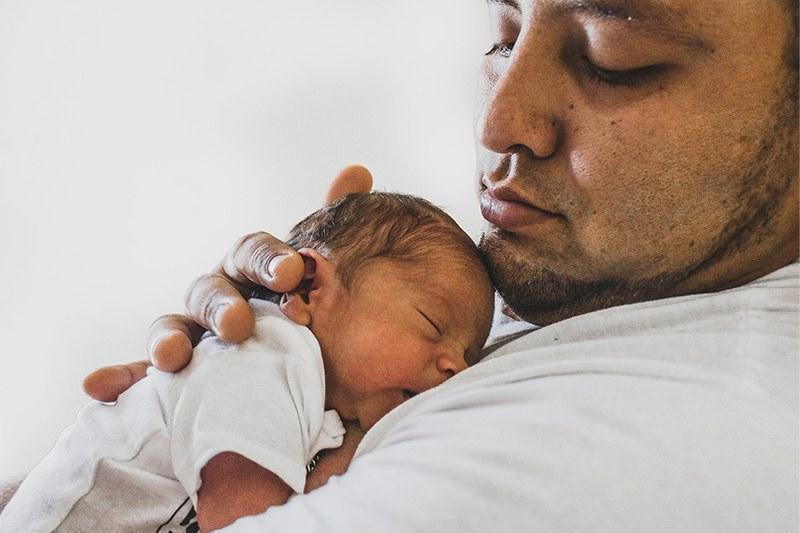
What Is Newborn Screening?
The Delaware Newborn Screening Program (NSP) is used to determine if newborn babies have any rare health disorders. Babies with these disorders may appear healthy at birth. But most of these disorders, if not detected or treated soon after birth, can result in a developmental delay, a notable cognitive disability, serious medical problems, or even death. Before a newborn goes home from the birth hospital, they will receive a heart, blood spot, and hearing screening.
Your Child Should Receive Three Specific Screenings:
A heart, blood spot, and hearing screening are part of the standard of care to check the health of your baby.
In the heart screening process, a caregiver uses a pulse oximeter to measure the amount of saturated oxygen found in the baby’s blood. It is measured by placing sensors on the baby’s skin within 24 hours of life, and the screening is done to make sure the infant’s heart and blood flow are working properly. Low levels of oxygen can be a sign of a critical congenital heart defect. If a family leaves the hospital without getting the heart screening process done, the consequences can be dire, as the baby may not be getting enough oxygen. To learn more about the heart screening process, visit the CDC
Every baby is offered a newborn blood spot screening, also known as a heel-prick test, ideally between 24 and 48 hours (one and two days) of life. The results should be collected within the first five days of life. The blood spot screening involves taking a blood sample to find out if the baby has any rare but serious health conditions. Most babies won’t have any of these conditions, but for the few who do, the benefits of screening are significant. Early treatment can improve their health and prevent severe disability or even death. View the blood spot screening process
The hearing screening is called the Early Hearing Detection Intervention (EHDI) program. This program works to ensure that families of babies and children who are deaf or hard of hearing (DHH) receive appropriate and timely services. These services include a hearing screening, diagnosis, and early intervention (EI), as well as parent-to-parent support provided through coordinated systems of care.
NCHAM: A Sound Choice
Get them tested
Hearing loss could affect your child’s speech and language development. Schedule a hearing screening before your child is 1 month old.
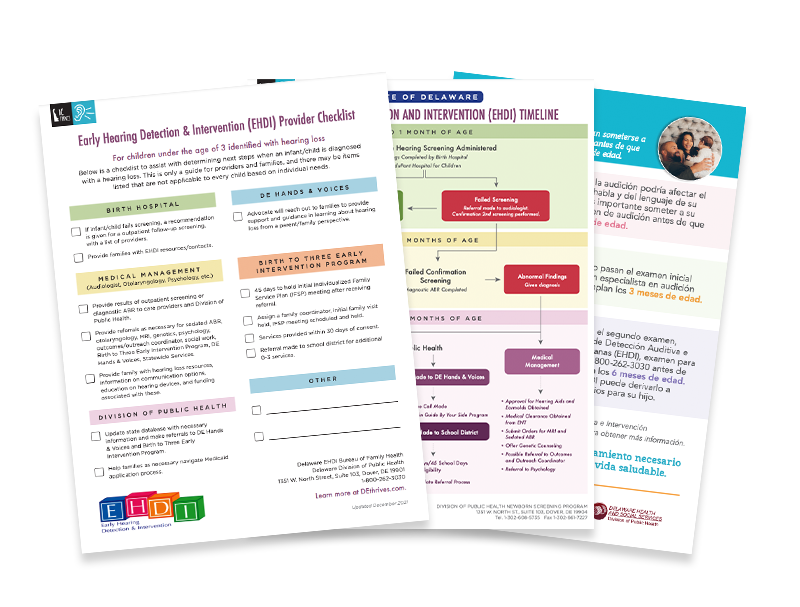
Free Resources
Additional Resources
Below are resources and outside services that can help.
Title V Landing Page
There are specific National Performance Measures (NPMs) to serving children and youth with special health care needs (CYSHCN)
Blood Spot Screening
Blood spot screening contact info here. Phone: 302-651-5079 Fax: 302-295-0719
Delaware Hands & Voices
Delaware Hands & Voices is a nationwide nonprofit organization dedicated to supporting families and their children who are deaf or hard of hearing, as well as the professionals who serve them. It is a parent-driven, parent/professional collaborative group that is unbiased towards communication modes and methods.
Parent Information Center (PIC)
The Parent Information Center (PIC) provides information about disabilities and special education rights and consultation about obtaining appropriate services for children with disabilities. It also helps parents prepare for Individualized Education Plan (IEP) and other school meetings.
Deaf Mentor Program
The Deaf Mentor Program provides families with deaf/hard of hearing children an opportunity to work with highly trained deaf/hard of hearing adult role models to enhance children’s language, social, and emotional development. The program is free for the families!