Providers and Community Partners
Healthy Women, Healthy Babies Zones
Healthy Women, Healthy Babies (HWHB) zones is a free program for Delaware women at risk for poor birth outcomes. It provides grants to community partners who, in turn, create programs to give women ways to get healthy in their communities.
Learn more
Who qualifies for HWHB Zones?
This includes women for whom a pregnancy resulted in a poor birth outcome, such as:
- an infant death
- a stillbirth
- a low-birth-weight newborn
- a premature birth
Other women may also enroll in the program if presenting with two of the following risk factors:
- history of chronic disease (e.g., asthma, cancer, chronic obstructive pulmonary disease, diabetes and/or hypertension)
- high stress (based on a self-reported Perceived Stress Scale)
- maternal age under 18 or over 35
- mental illness (based on clinical diagnosis and/or self-reported Patient Health Questionnaire)
How can the HWHB Zones program benefit the people I help?
HWHB is all about helping women get healthy — from getting the care they need to identifying community programs that improve their daily health. HWHB provides extra services for women who are pregnant, who are planning to be pregnant, or who just want to live healthier lives. These services include:
personal health and wellness weight management stress management guaranteed basic income (GBI) and housing stabilization financial literacy
Become a HWHB Provider
Contractors are selected through a competitive process that prioritizes service delivery in geographic areas found to have high rates of infant mortality. The Healthy Women, Healthy Babies Program services are grouped into four service bundles:
- preconception care
- psychosocial care (i.e., mental health diagnosis and counseling)
- prenatal care
- nutrition care
Services in each bundle are based on clinical practices recommended by:
- American Academy of Pediatrics (AAP)
- American College of Obstetricians and Gynecologists (ACOG)
- Centers for Disease Control (CDC)
- United States Preventive Services Task Force (USPSTF)
Bundles include enhanced services not fully covered by Medicaid or private insurance (e.g., oral health education and psychosocial risk assessment). Service bundles are delivered to individual women depending on need. Referrals should be made directly to participating providers.
Healthy Women, Healthy Babies Zones Mini-Grants
The Delaware Division of Public Health (DPH) and the Delaware Healthy Mother & Infant Consortium (DHMIC) award mini-grants to support local organizations. The organizations strive to reduce infant and maternal mortality as well as morbidity among women with poor birth outcomes in Delaware through results-driven work. Following are the previous mini-grant winners along with new program information. These are programs for you to share with the community you serve. Women don’t need a referral for the programs; they can get more information directly from the organization.
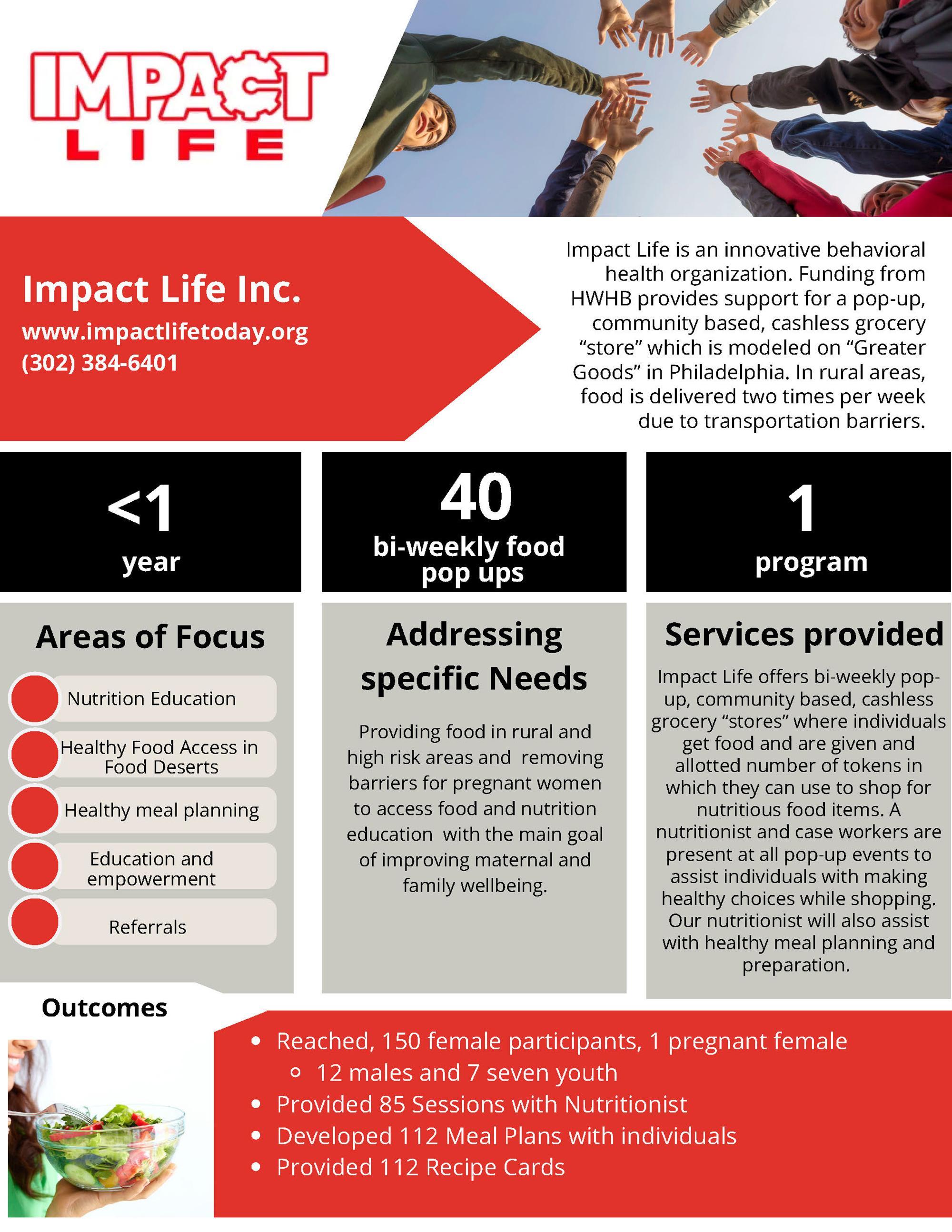
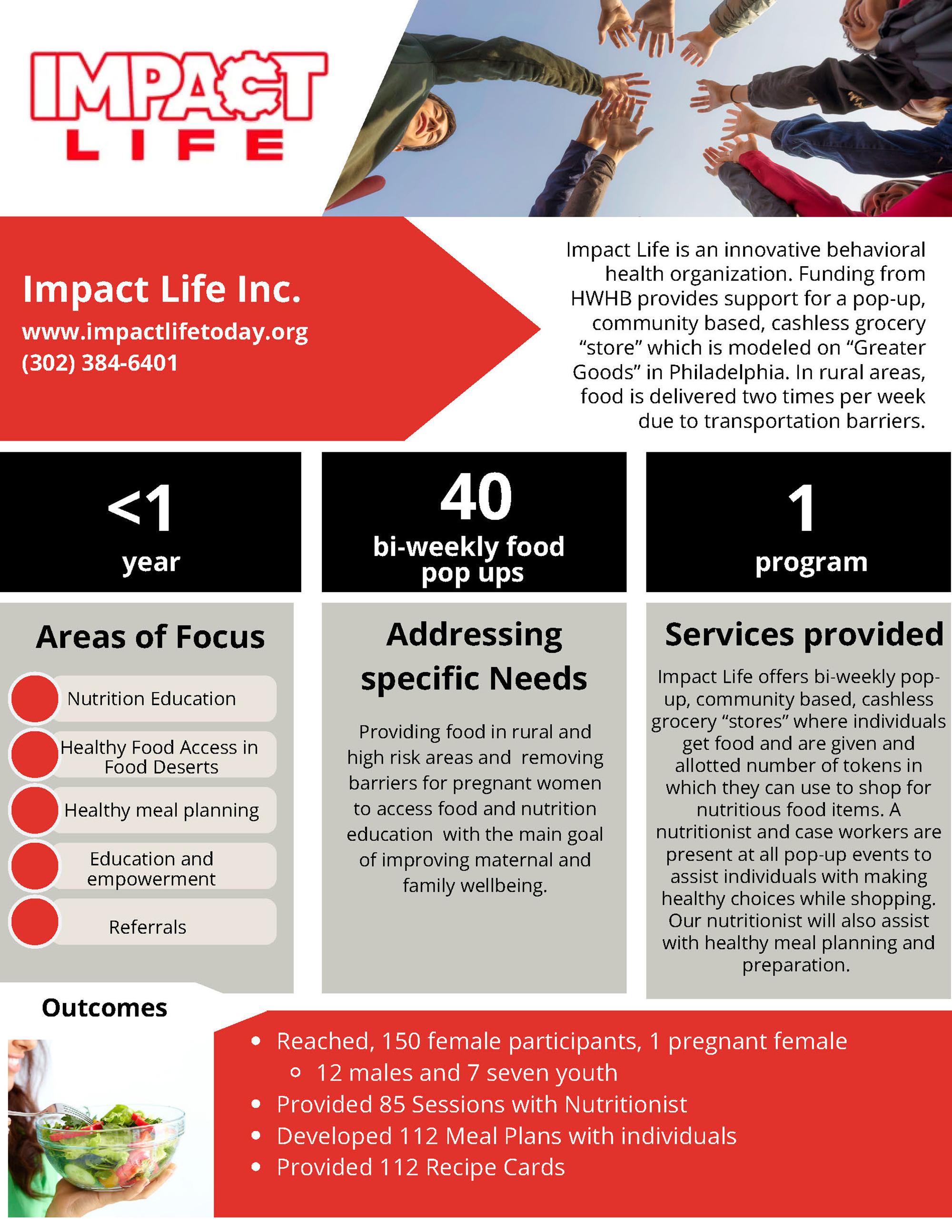
Impact Life Inc.
VisitImpact Life is an innovative behavioral health organization whose mission is to build a solid foundation of recovery through unique recovery residences, peer support, workforce development, cultural and spiritual experiences, opportunities for peer leadership, and service work projects. This organization is implementing a pilot program of a cashless grocery store in New Castle County (ZIP codes 19703, 19809, 19802, 19801, 19805, 19804, 19702, and 19720). This program will be modeled on “Greater Goods” in Philadelphia. Under this program, individuals come to a local, biweekly pop-up food distribution event and are given an allotted number of tokens per person, which can be used to shop for food. A nutritionist is present at all pop-up events to assist families with making healthy choices while shopping. A case manager is also present at all events to connect individuals with any needed services, including breastfeeding educators, WIC, and other infant feeding resources. A cashless grocery store allows individuals to “shop” and doesn’t have some of the stigma and fear associated with a food closet model. Impact Life is also creating a “DoorDash” type of pilot program for mobile food distribution in western Sussex County. Since it’s a rural area with a lack of resources, individuals would sign up for biweekly food delivery. This reduces the transportation barrier as well as the shame that can be associated with food insecurity. Impact Life also provides educational programs that teach individuals how to grow their own food at home and make nutritious meals.
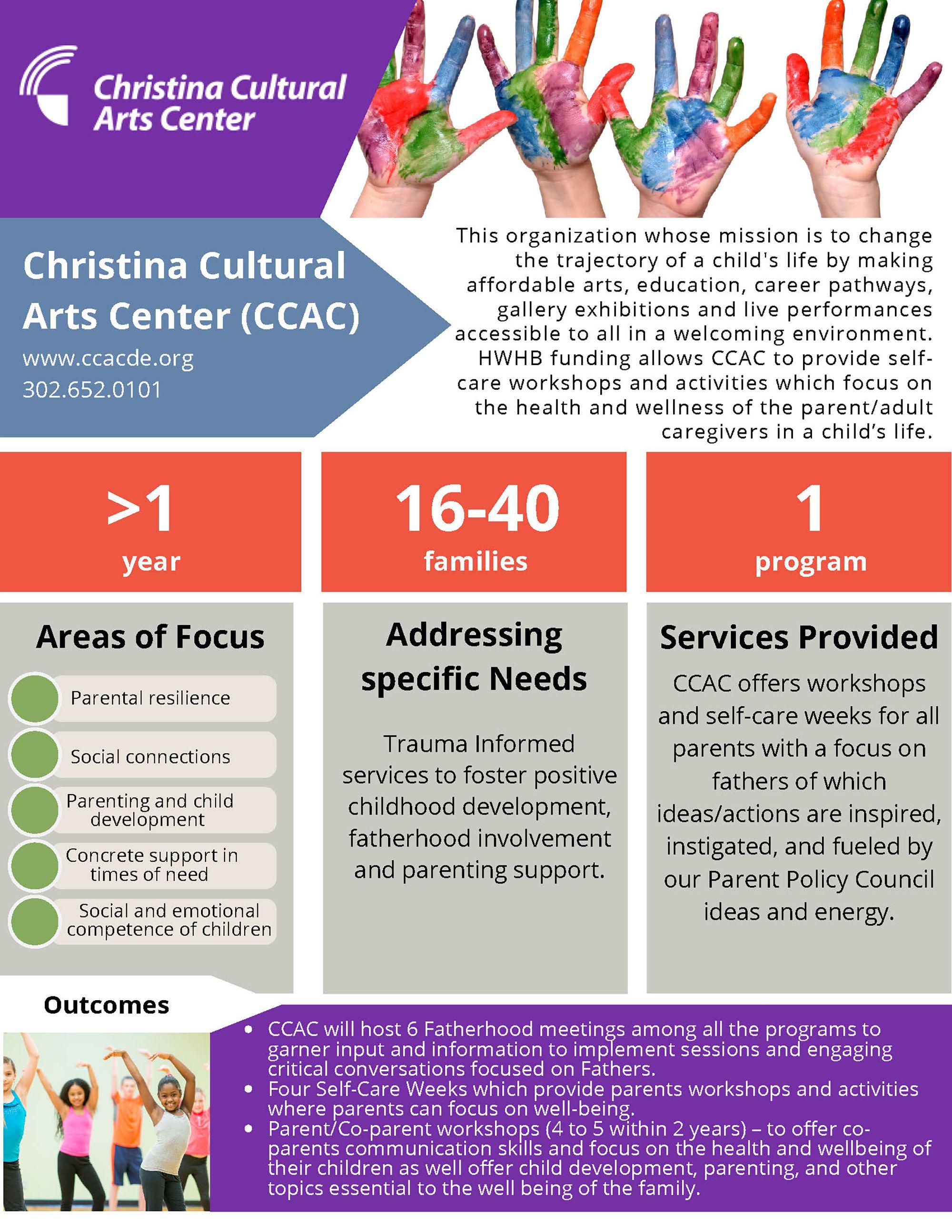
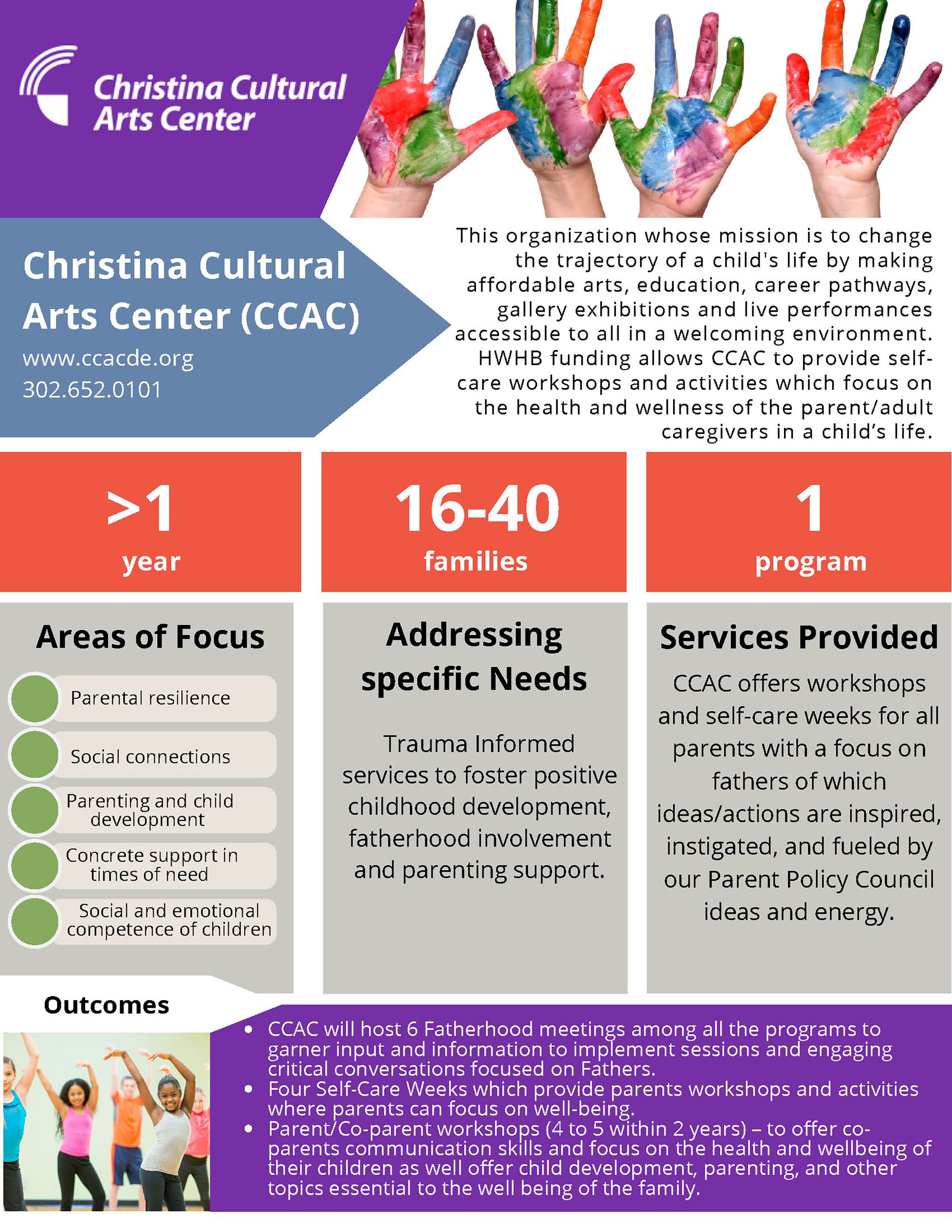
Christina Cultural Arts Center (CCAC)
VisitThis organization’s mission is to change the trajectory of a child’s life by making arts, education, career pathways, gallery exhibitions, and live performances affordable and accessible to all, in a welcoming environment. CCAC provides self-care workshops and activities that focus on the health and wellness of the parents or adult caregivers in a child’s life. Healthy Women, Healthy Babies (HWHB) funding allows the organization to expand its activities to appeal to, attract, and maintain participation of fathers, and it gives the organization two school years of stability to “grow” and enhance efforts to engage parents involved with the center in the past. CCAC is implementing this program at six childcare centers and early head start sites in Wilmington. CCAC hosts Fatherhood Initiative meetings plus activities that include a fatherhood track in four self-care weeks.
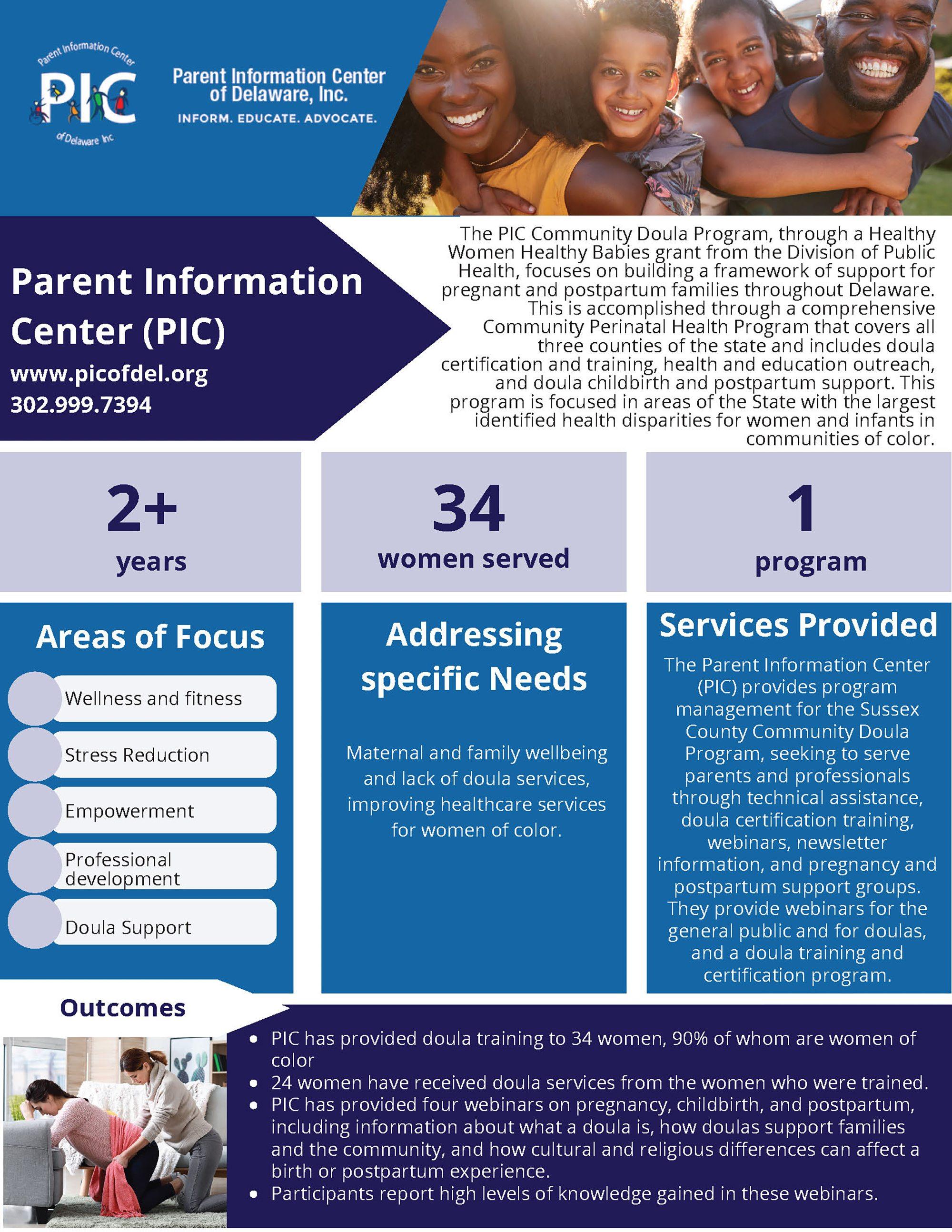
Parent Information Center (PIC) — Doula Program
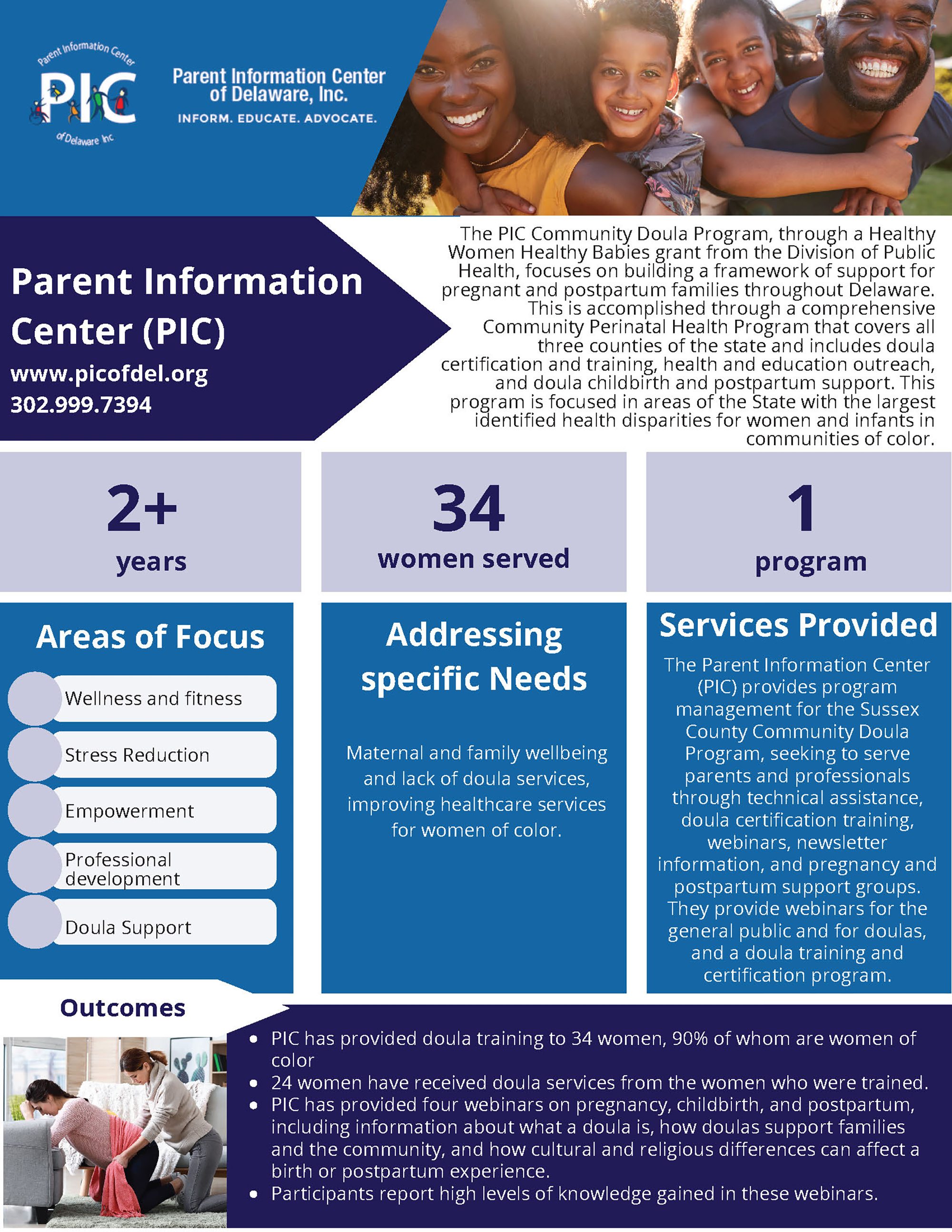
VisitWith its grant funding, the Parent Information Center now has six doulas, who will provide nonclinical emotional, physical, and informational support before, during, and after labor and birth to potentially 20 to 30 women. In partnership with community organizations, the program provides virtual training on childbirth education, breastfeeding initiation, prenatal nutrition, healthy family relationships, and community supports; empowers women to be their own self-advocates; provides one-on-one coaching calls with pregnant women (prenatal and postpartum) starting six weeks before due date and continuing six weeks postpartum; offers postpartum support groups with other new parents as well as breakout sessions on breastfeeding, sexuality, mental health, and infant development; and creates an awareness campaign focused on prenatal and postpartum support.
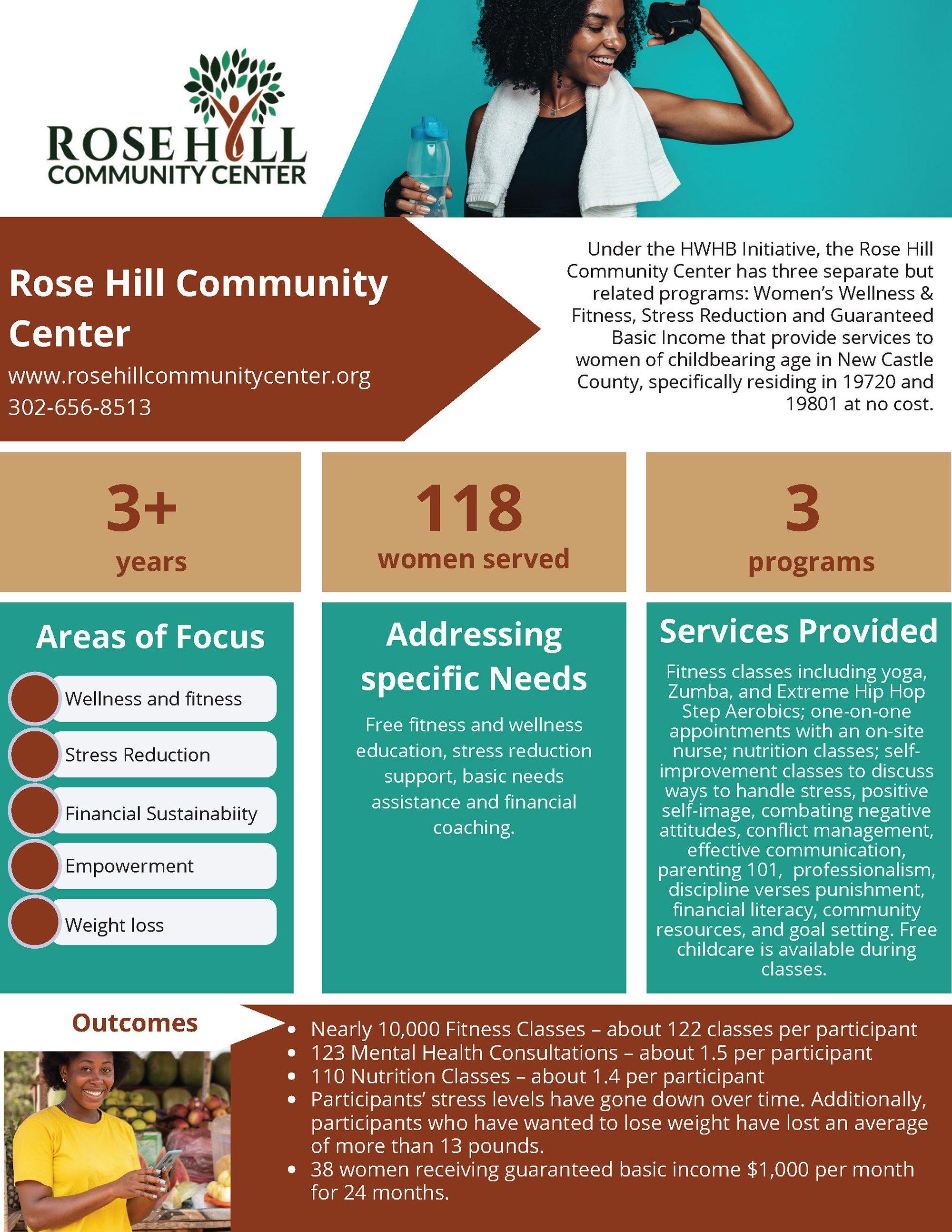
Rose Hill Community Center — Stress Relief Program
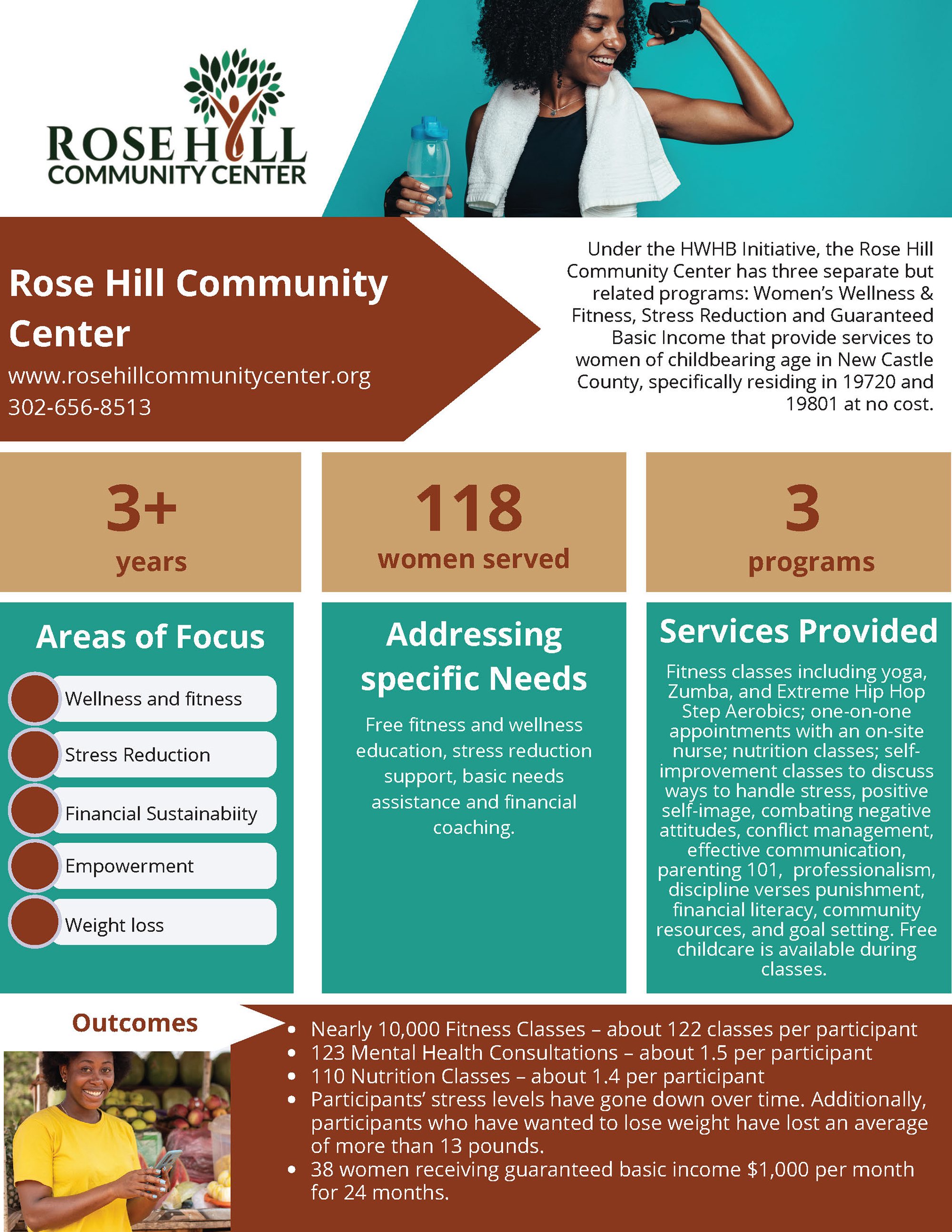
VisitThis organization uses its grant funding to address toxic stress — as they feel that stress during the pandemic has led to fear and anxiety, causing residents in their service area to be overwhelmed and have feelings of isolation and loneliness. Rose Hill’s funded program works to serve women ages 15 to 44 in New Castle (ZIP code 19720) and Wilmington (ZIP code 19801) by providing free mental health workshops with psychologists and psychiatrists, twice a month, covering the following topics and more: feelings of isolation, depression, self-care, setting boundaries, stress, and knowing your triggers. Rose Hill provides lessons on reducing stress, breathing sessions, mindfulness training, and journaling. They also provide massage therapy and stretching techniques (three times per client), as well as yoga lessons once a week.
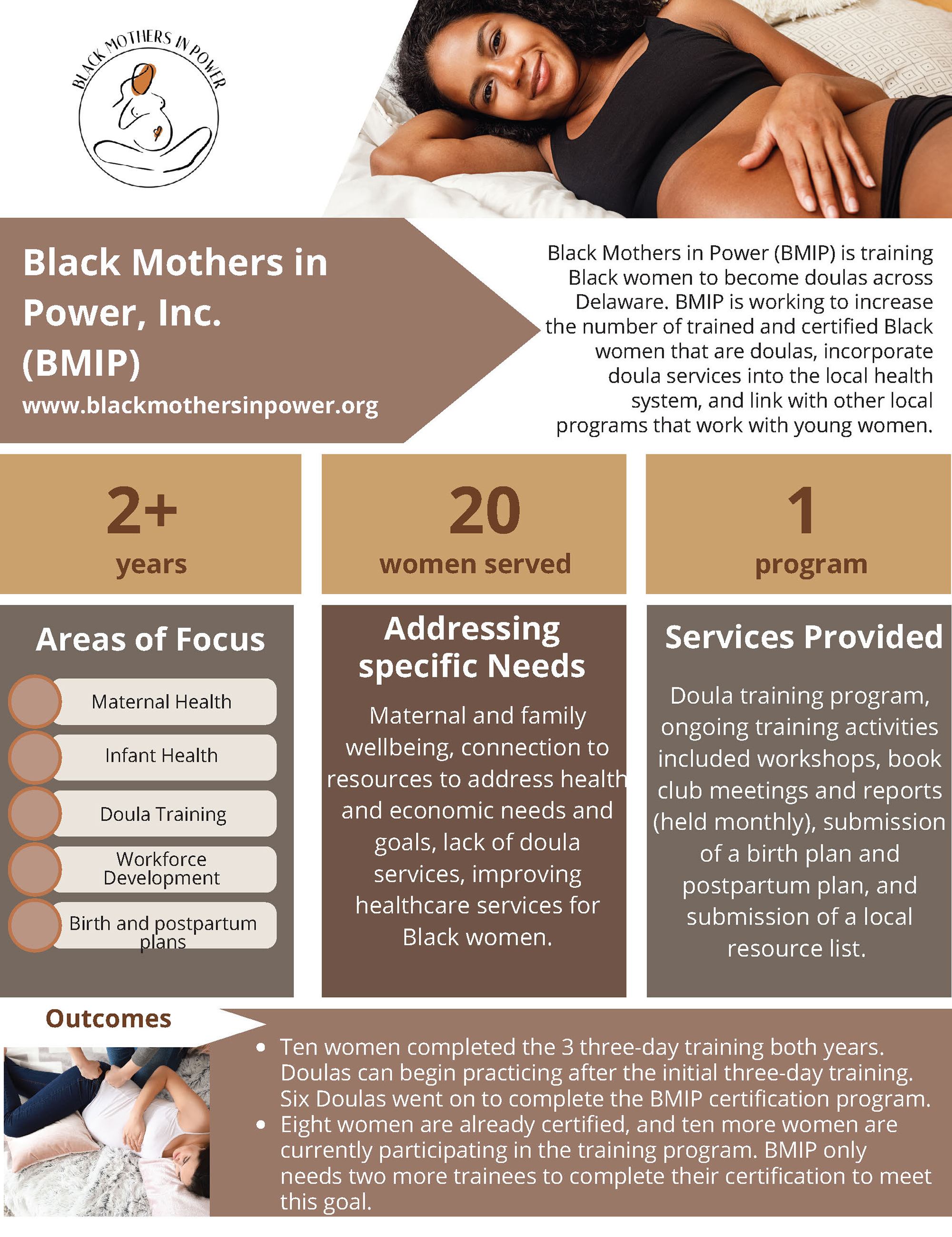
Metropolitan Wilmington Urban League — Black Mothers in Power Doula Training Program
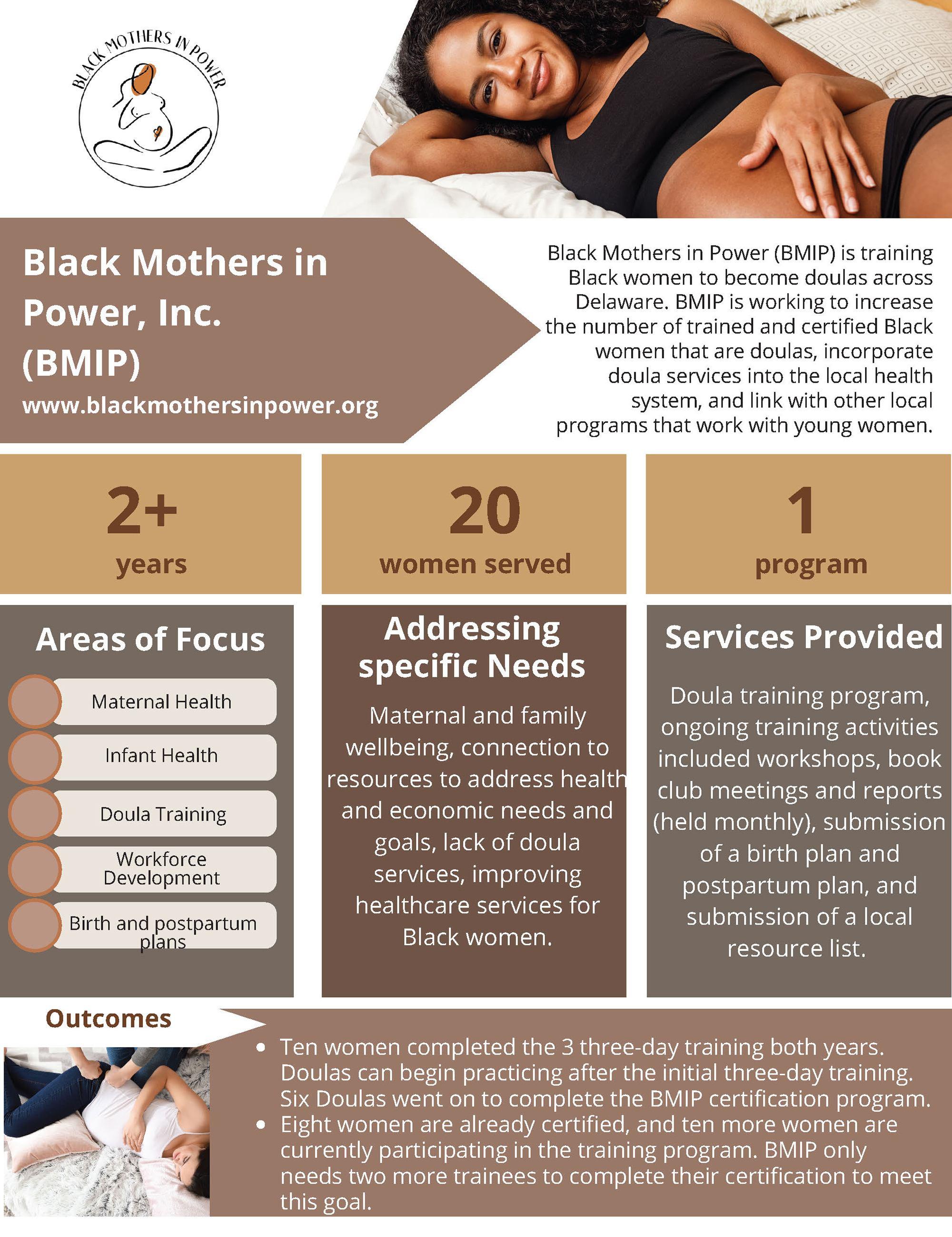
VisitThe Metropolitan Wilmington Urban League uses grant money to provide and sponsor a doula program to train 10 Black women to become certified doulas through the National Black Doula Association. The organization has trained five doulas in New Castle County and Kent County, and will be focusing on engaging at-risk pregnant women who live in high-risk zones. Each doula will help women during the critical times of pregnancy, birth, postpartum, and early parenting, serving potentially 45 women during the period of the grant.
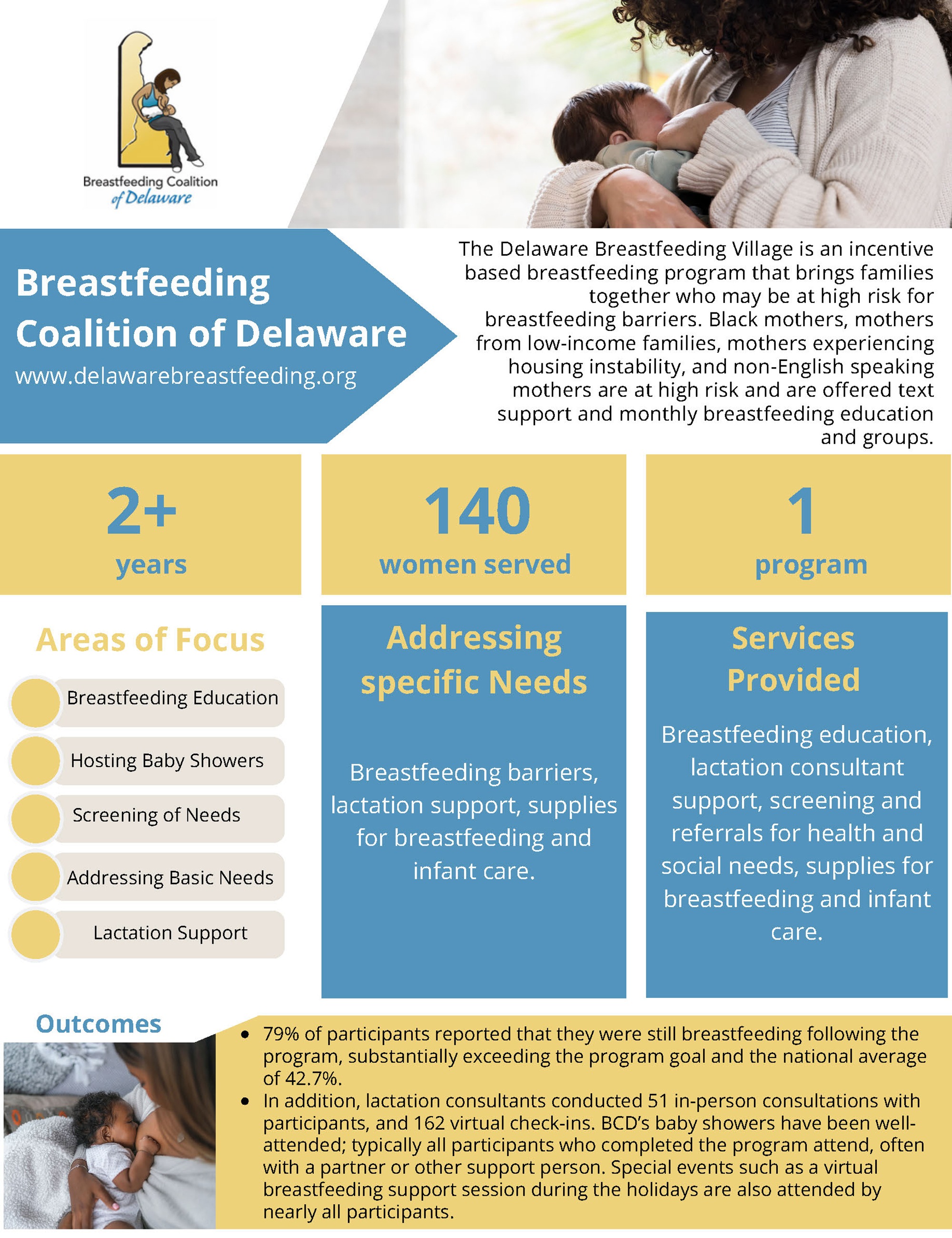
Breastfeeding Coalition of Delaware — Breastfeeding Support
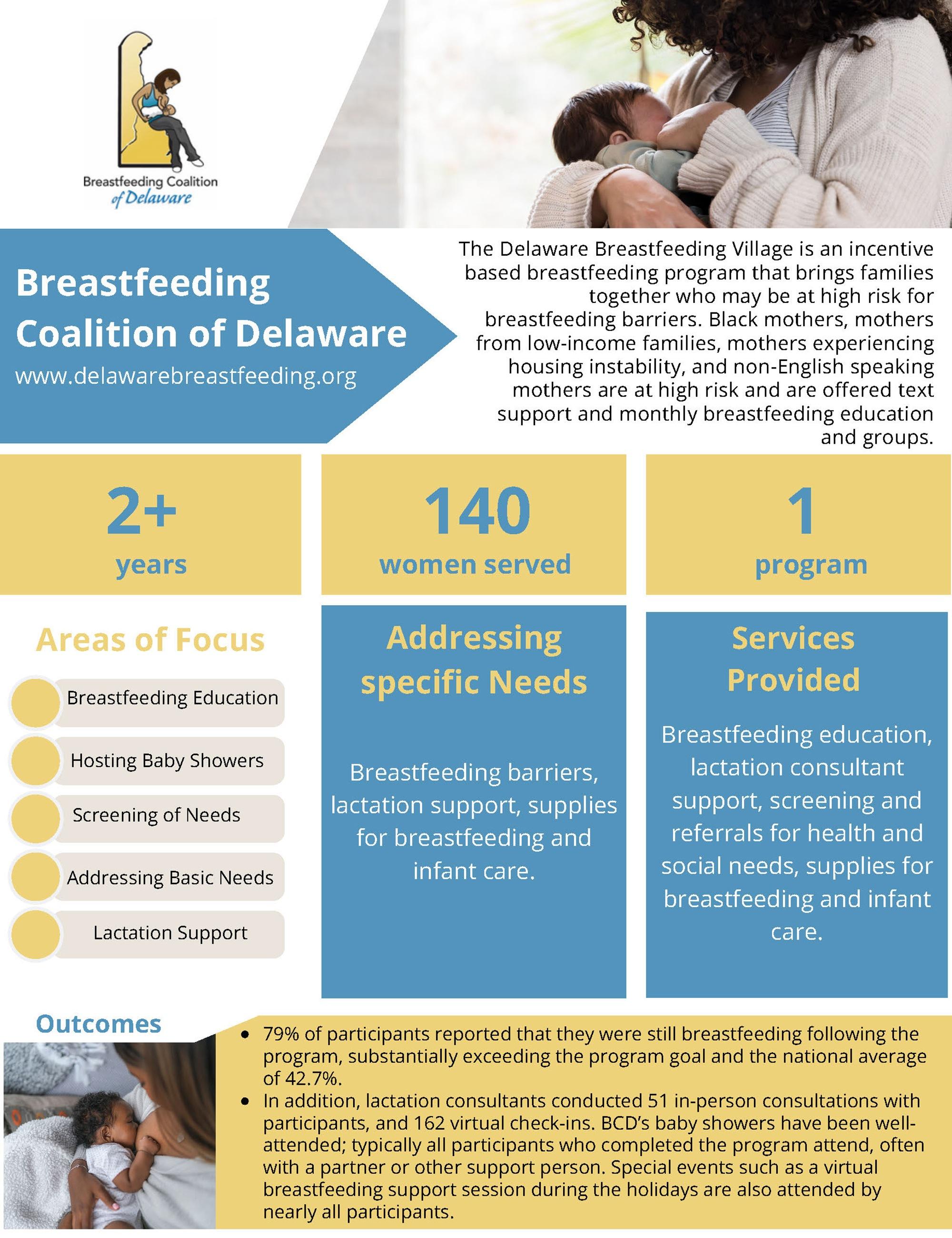
VisitThrough its funded program, the Breastfeeding Coalition of Delaware provides breastfeeding support groups to the HWHB high-risk zones of Wilmington, Claymont, and Seaford. It will offer accessible support, engaging groups, text check-ins, access to variable levels of lactation support, and incentives for participation. In addition, the Breastfeeding Coalition of Delaware will hire three diverse breastfeeding peer counselors (BPC) and one lactation consultant to provide breastfeeding support to women. At the completion of the program, the Breastfeeding Coalition of Delaware will host a baby shower for participants, where they will provide needed baby supplies, education, and support to pregnant and postpartum women.
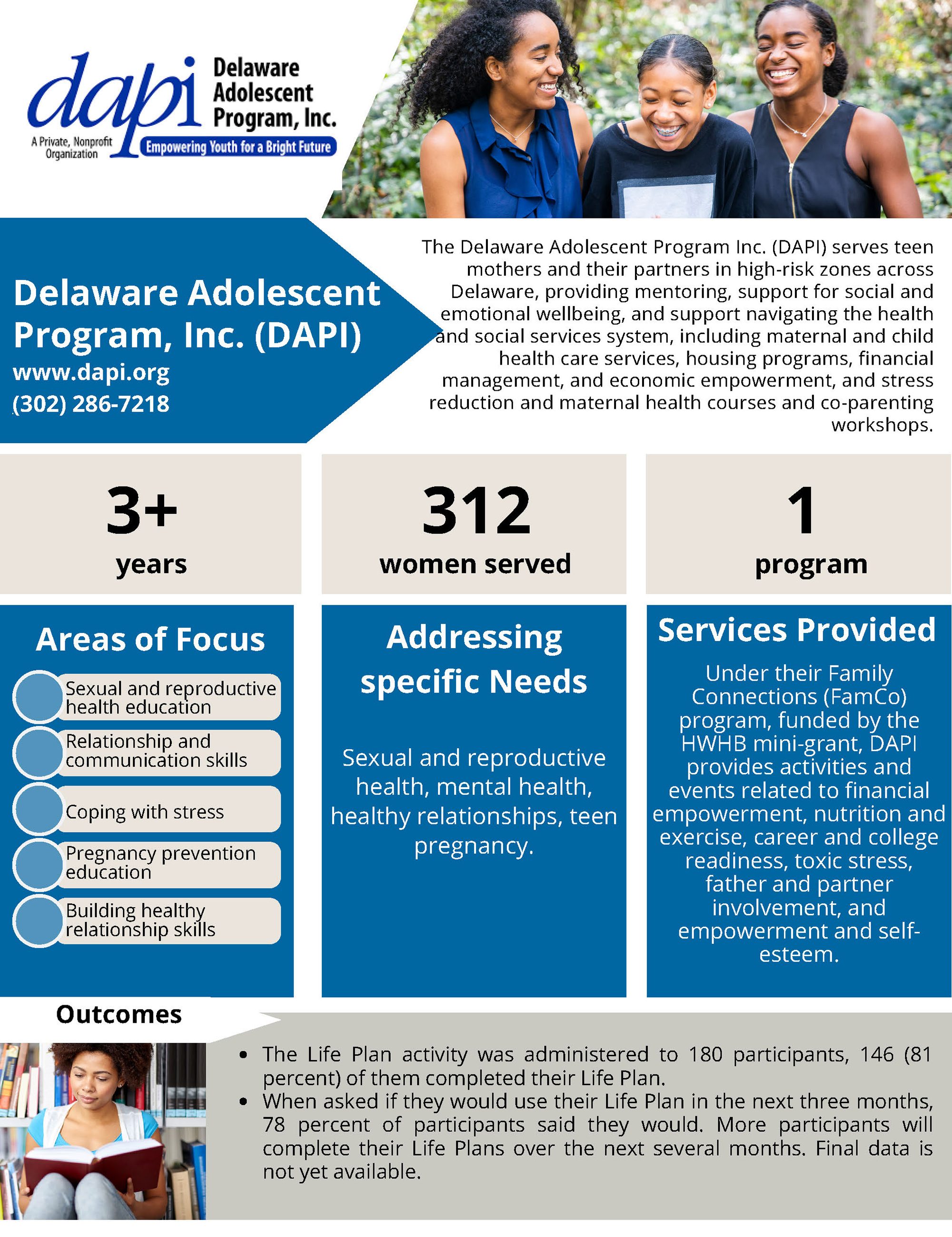
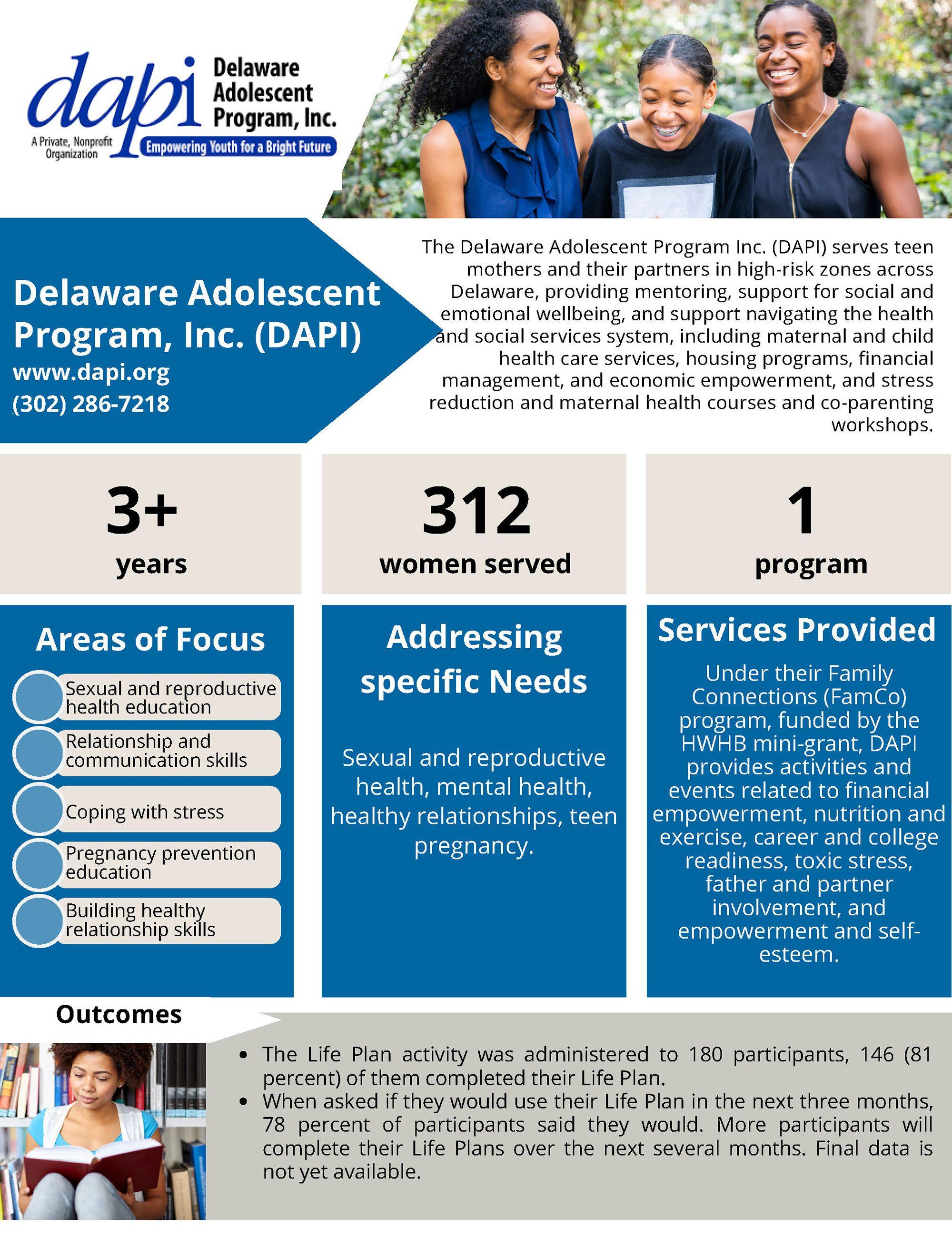
Delaware Adolescent Program Inc. (DAPI)
VisitDAPI serves teen mothers and their partners who live in high-risk zones throughout the state. DAPI provides ongoing mentoring services for social and emotional well-being, as well as support in navigating the health and social services system, including maternal and child health care services, housing programs, financial management, and economic empowerment. DAPI will also encourage college and career readiness based on each individual’s self-identified goals, identify and address adverse childhood experiences, and offer stress reduction and maternal health courses and co-parenting workshops. DAPI will provide services at each of its service sites, located in each county, as well as directly in the community and in collaboration with a variety of community-based partners.
REACH Riverside Development Corporation (REACH) Multigenerational Maternal and Child Health Program
At its Kingswood Community Center, located in the Riverside community in northeast Wilmington, REACH serves women of childbearing age and their families, targeting women who live in ZIP codes 19801 and 19802. To reduce toxic stress for women of childbearing age, REACH has created a multigenerational maternal and child health program with three components. First, a peer-to-peer program provides mindful and empathetic services before, during, and after pregnancy. The program will focus on stress and adverse childhood experiences training, examine the role of adverse experiences through a multigenerational lens, and address strategies to prevent generational transference of these experiences to children in particular. REACH plans to train at least 40 women during the period of the grant. Second, the organization provides care management through referral and resource services, as well as case management via a community family and support service liaison. The liaison’s focus is financial empowerment, self-sufficiency, and housing. Third, REACH provides workshops to increase fatherhood/partner engagement, using strategies for inclusion and parenting dynamics that support mothers and their children.
VisitRose Hill Community Center — Women’s Wellness Program
VisitThe Rose Hill Community Center’s Women’s Wellness Program offers women of childbearing age in the 19720 and 19801 ZIP codes the opportunity to take fitness, nutrition, and self-improvement classes at no cost. Fitness classes include yoga, Zumba, and step aerobics. One-on-one appointments with an on-site nurse will be available. Self-improvement classes discuss ways to handle stress, positive self-image, combatting negative attitudes, conflict management, effective communication, parenting 101, couponing, social media, professionalism, discipline versus punishment, financial literacy, community resources, and goal setting. Participants have access to an on-site mental health consultant who is a National Certified Counselor and Licensed Professional Counselor of Mental Health. Fitness activities and other services will be tailored to pregnant women and other participants with specific needs, through meetings with a nurse and Women’s Wellness Program staff.
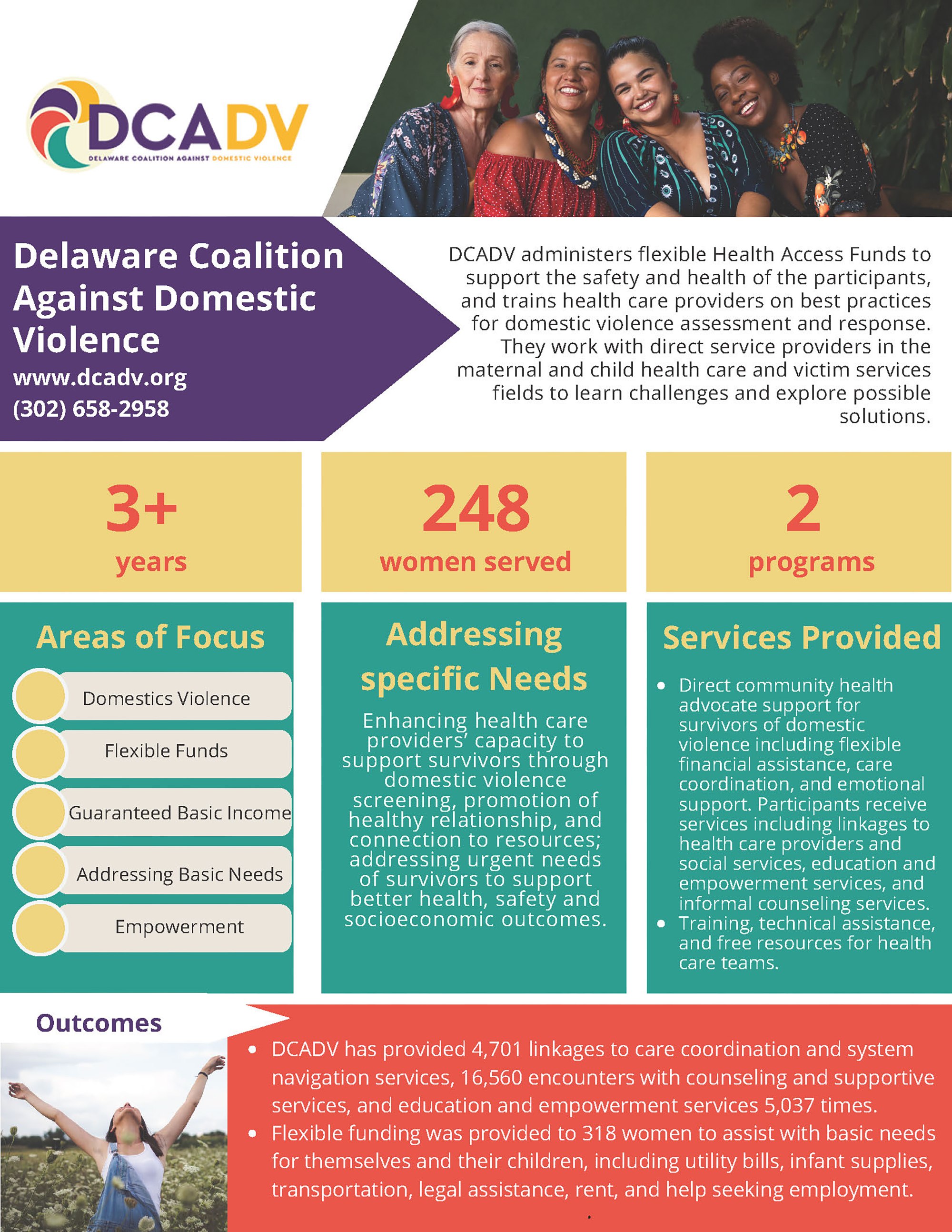
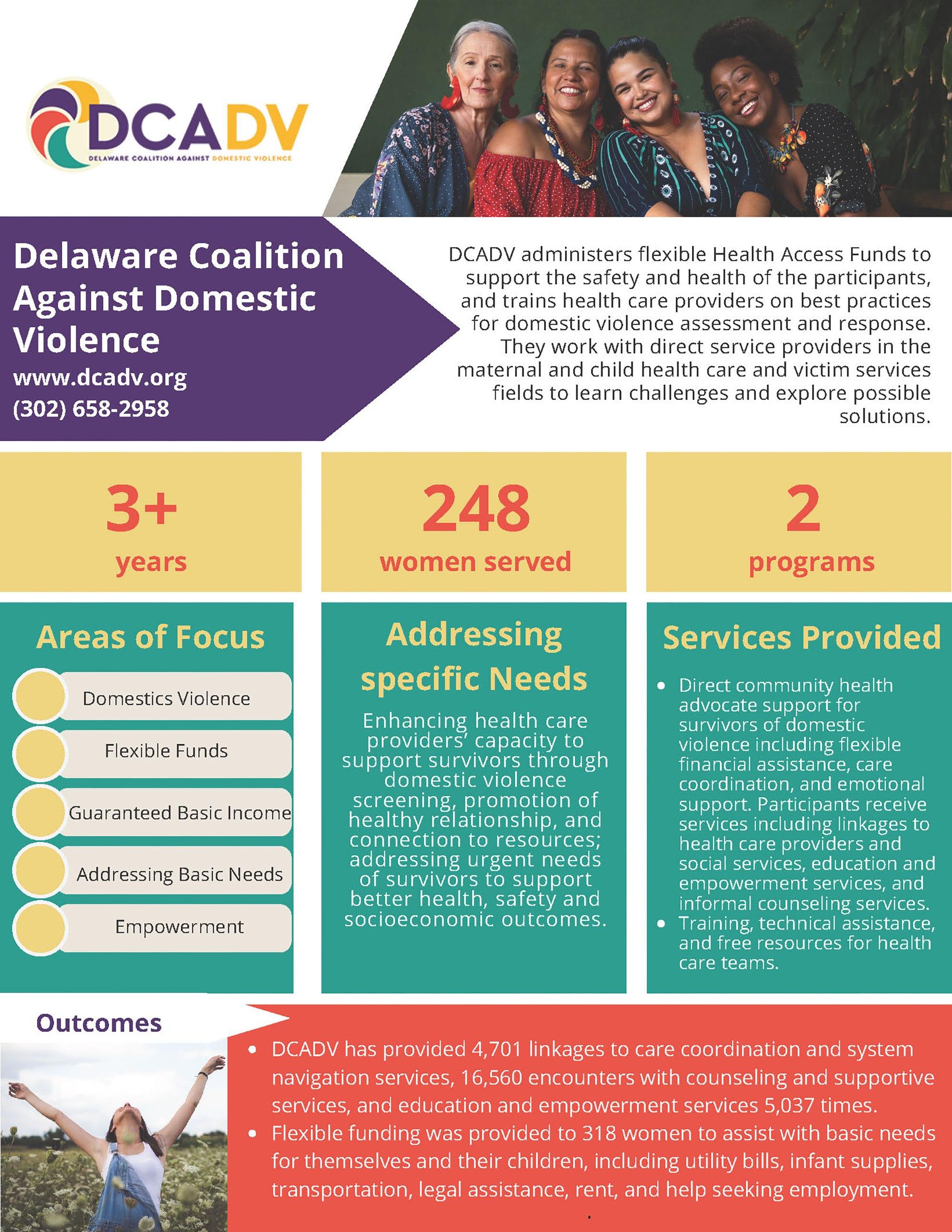
Delaware Coalition Against Domestic Violence (DCADV) Community Health Worker Collaborative Project
VisitDCADV provides support and expanded integration of its health services statewide through its Community Health Worker Collaborative Project, which seeks to integrate domestic violence and health services to improve the health and safety of victims and survivors. The program serves Black and Hispanic/Latina women who are pregnant or parenting a child under the age of 5, or are of reproductive age, who are living in the identified high-risk zones 19703, 19809, 19802, 19801, 19805, 19804, 19702, and 19720 (New Castle); 19901 and 19904 (Kent); and 19973, 19933, 19950 (Sussex). The program will manage and expand service delivery to the HWHB target population; administer flexible Health Access Funds to support the safety and health of the participants; and train health care providers on best practices for domestic violence assessment and response, interviews, and focus groups and/or surveys for individuals at the two New Castle County domestic violence shelters. It will work with direct service providers in the maternal and child health care and victim services fields to learn about challenges and explore possible solutions.
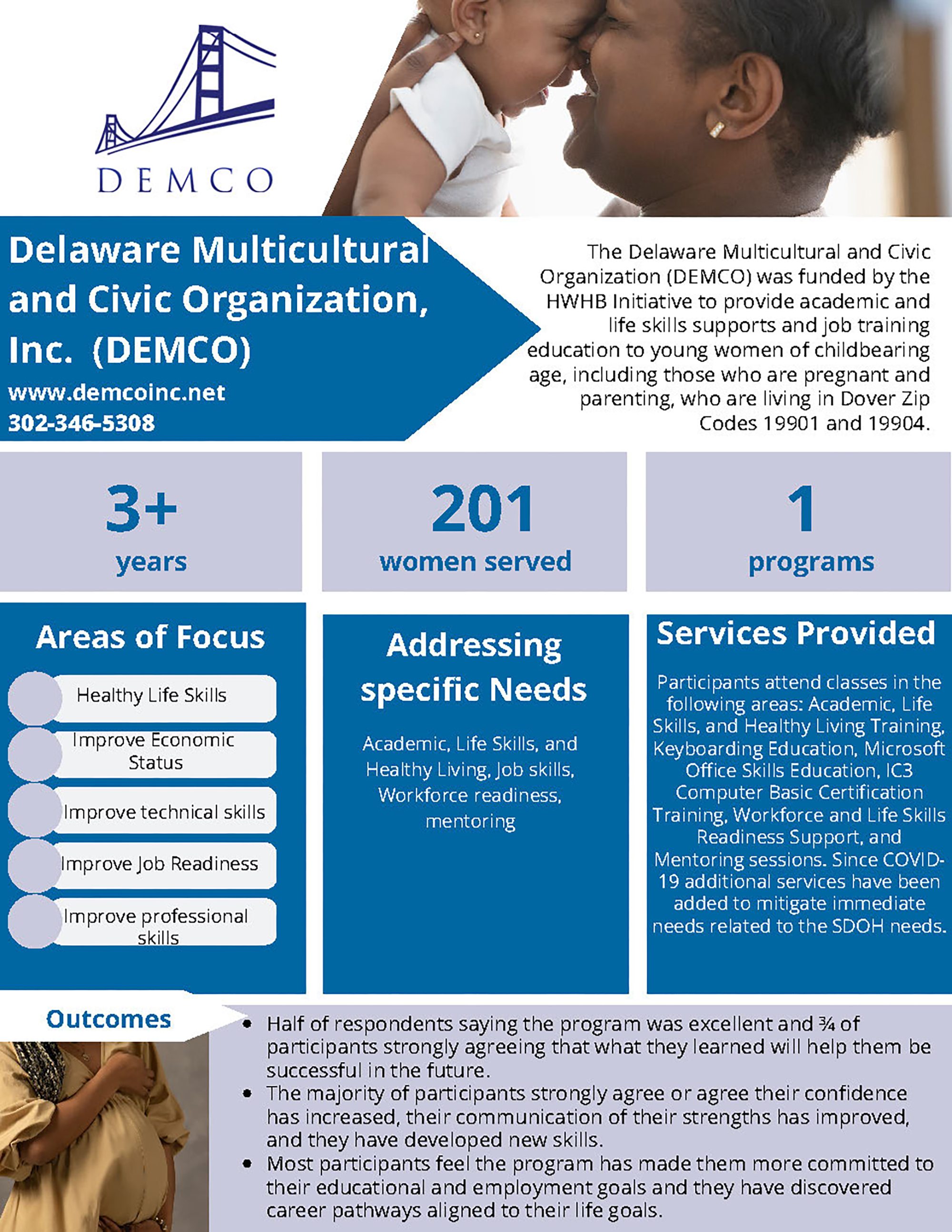
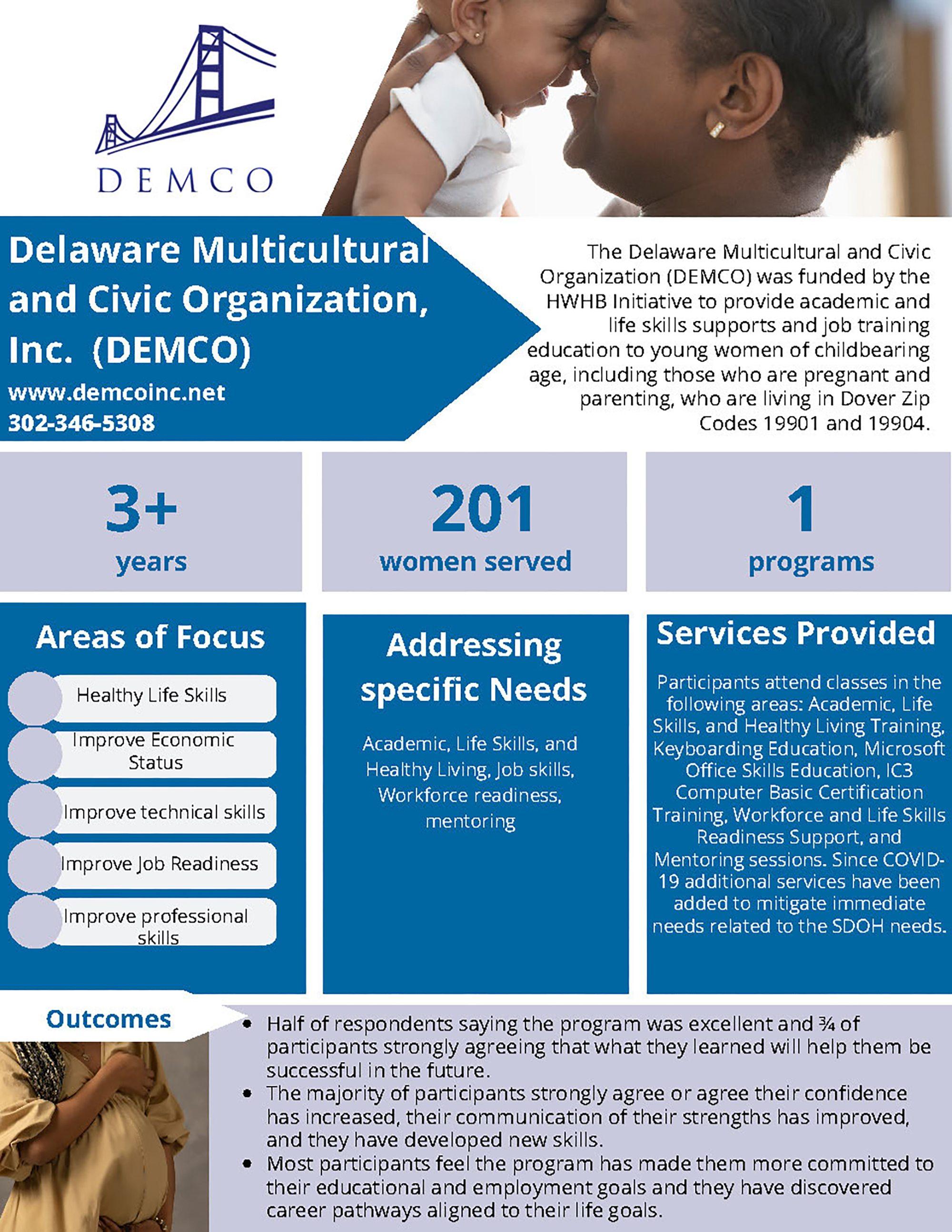
Delaware Multicultural and Civic Organization (DEMCO, Inc.)
VisitDEMCO provides academic and life skills supports and job training education to young women of childbearing age, including those who are pregnant or parenting, living in Dover ZIP codes 19901 and 19904. Each woman served will be matched with a mentor to provide social and emotional support. The program progresses through a series of educational workshops to help women develop hard and soft skills to better prepare for gainful employment and a career in the IT field. The program also includes support for fathers/partners, including effective father/partner parenting lessons and an opportunity to engage in job shadowing and internship placement.
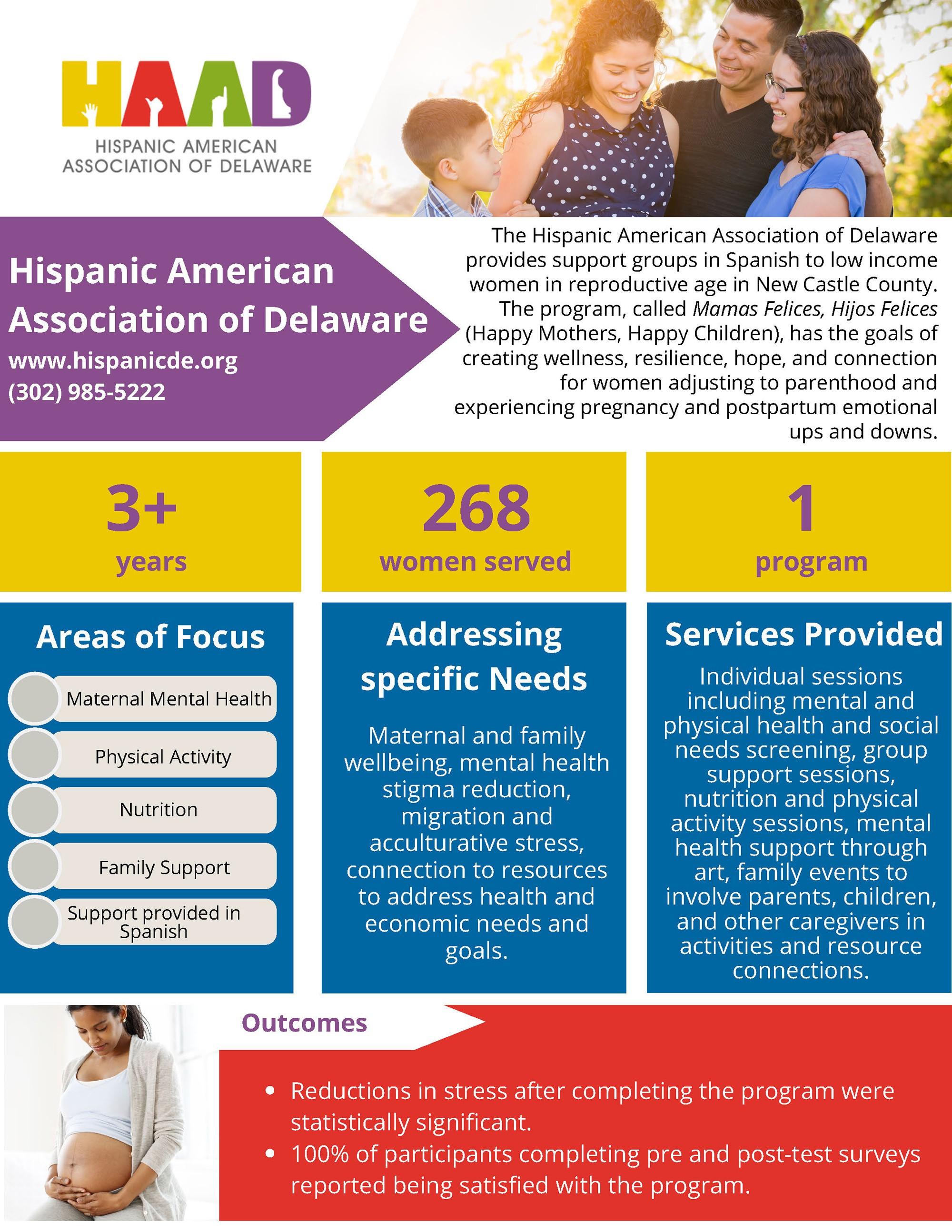
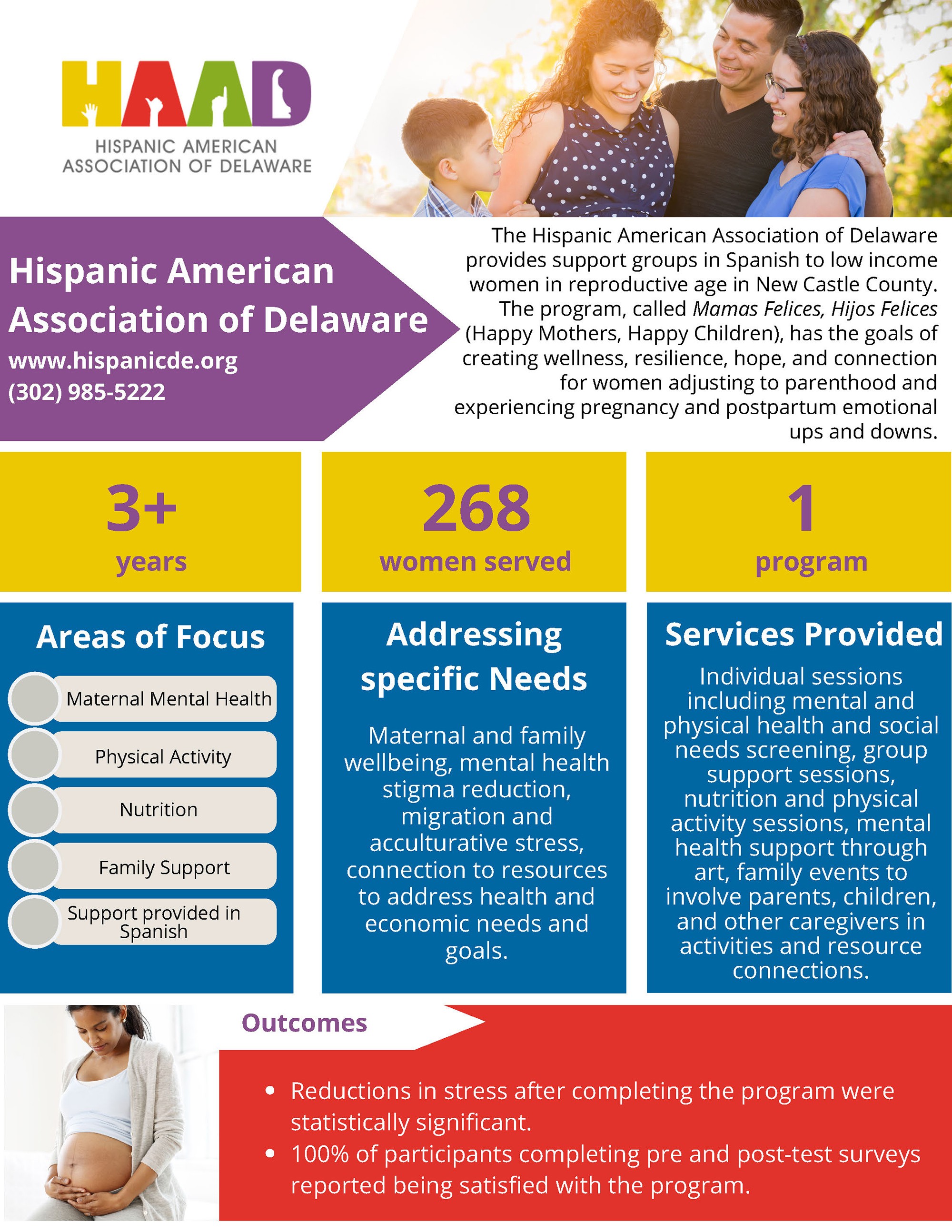
Hispanic American Association of Delaware Mamás Felices, Hijos Felices (Happy Mothers, Happy Children)
VisitThe Hispanic American Association of Delaware provides pregnancy and postpartum support in Spanish to women ages 15 to 44 who live in ZIP code 19720 in New Castle County. A support group called Mamás Felices, Hijos Felices (Happy Mothers, Happy Children) will be located at Garfield Park, which is within walking distance for many Latino families. Mamás Felices, Hijos Felices creates wellness, resilience, hope, and connection for women adjusting to parenthood and experiencing pregnancy and postpartum emotional ups and downs. The support group will also address racism and language barriers by providing bilingual services. It will hire a dedicated community liaison to offer referrals to insurance and other needed services, reduce cultural mental health stigma in the Latino population, and provide support to families with recent migration and acculturative stress. The organization will also create a family network event to involve the whole family (especially fathers) and to connect the community with pregnancy and postpartum mental health resources.